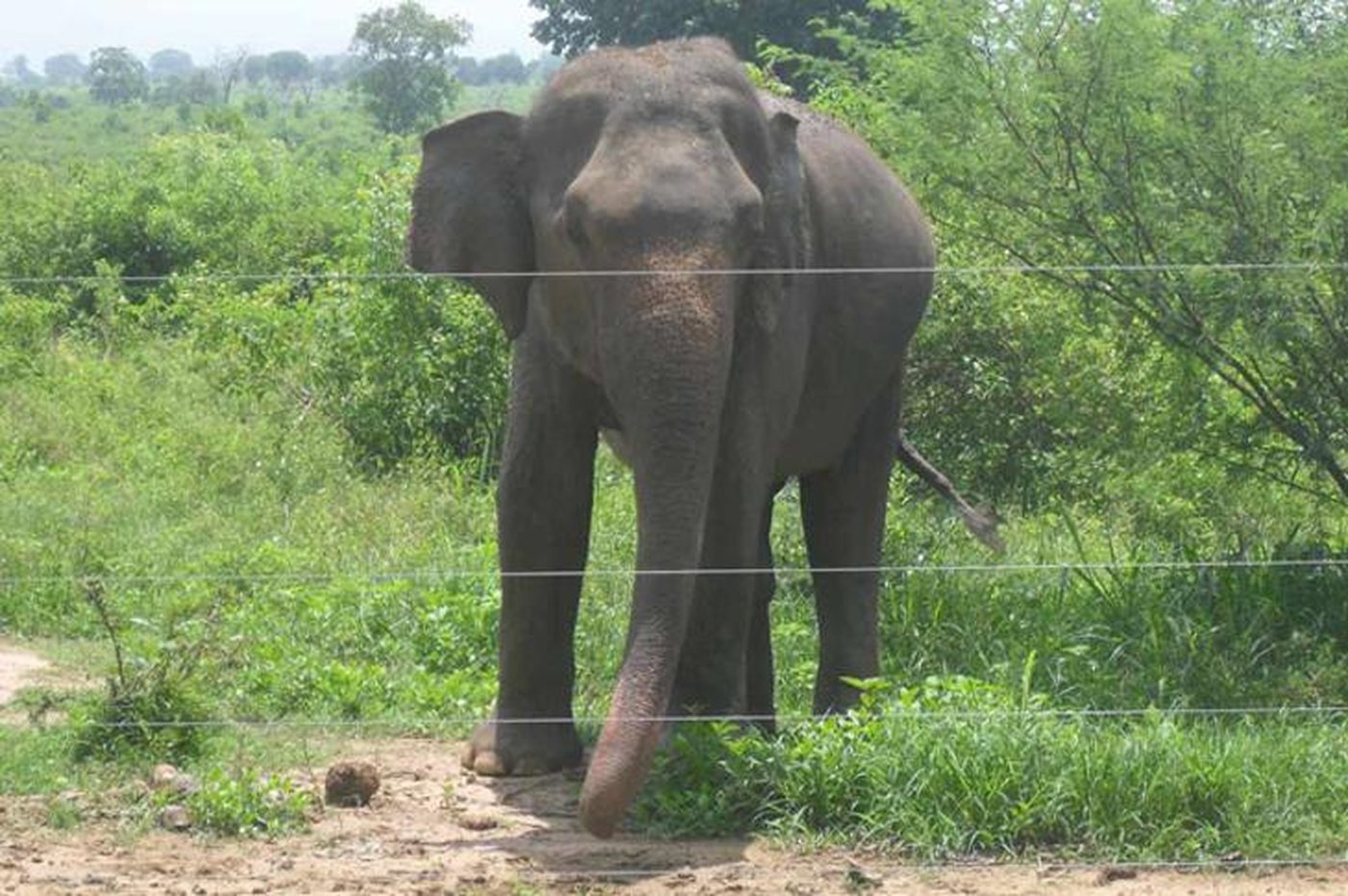
Sri Lanka records some of the highest rates of human-elephant conflict in the world. Every year the conflict claims human lives, destroys harvests and homes, and kills elephants — losses on both sides of the fence that no farming community should have to accept as normal. Modern electric fencing, properly engineered and maintained, remains the most effective non-lethal tool we have.
But "electric fence" covers everything from a genuinely engineered barrier that protects a village for a decade, to a sagging wire on sticks that teaches elephants fences are nothing to fear. This article explains the difference — in circuits, components and community practice.
How an electric fence deters a five-tonne animal
An electric fence is a psychological barrier, not a physical one. The energizer sends short, high-voltage pulses down the wires — painful for a split second, but precisely regulated and completely non-lethal. An elephant that touches the fence receives an unpleasant shock, associates the fence line with discomfort, and learns to avoid it. The animal is unharmed; the field behind the fence is spared. This learning effect is why consistency matters so much: a fence that is sometimes off teaches elephants exactly the wrong lesson.
The engineering that separates working fences from failures
Anyone can string wire on posts. Fences that hold elephants for years share specific engineering choices:
- High-joule energizers. Elephant fencing demands far more stored energy than livestock fencing. We install Nemtek energizers — built in Africa for exactly this task — with the output to maintain deterrent voltage across kilometres of line and through vegetation contact.
- Proper earthing. The most neglected component. A shock circuit is only as strong as its earth return; dry-zone soils demand deep, multiple-rod earth systems checked seasonally.
- Galvanized high-tensile wire at the correct heights and tensions for elephant contact — including designs that counter the well-known elephant tactics of pushing trees onto lines or probing with tusks, which don't conduct.
- Lightning and surge protection. Sri Lankan monsoon storms will find an unprotected energizer.
- Remote voltage monitoring. A fence fault discovered a week later is a raided field. Monitoring flags voltage drops the moment they happen, so repairs happen the same day.
| Failure mode | Root cause | Engineering answer |
|---|---|---|
| Fence "on" but no deterrence | Weak earth return in dry soil | Multiple deep earth rods, seasonal earth testing |
| Voltage collapses along the line | Undersized energizer, vegetation load | High-joule energizer + scheduled vegetation clearing |
| Elephants push trees onto the fence | Line routed under tree cover | Cleared corridor, breakaway sections, rapid-repair design |
| Energizer dead after storms | No surge protection | Lightning diverters and surge arrestors as standard |
| Faults found days later | No monitoring, no ownership | Remote voltage alerts + a named village maintenance team |

Why community integration decides long-term success
Research and field experience across Asia and Africa agree: fences fail socially before they fail technically. Lines that cut communities off from firewood, water or routes get bypassed or vandalised; fences nobody is responsible for maintaining decay within a couple of seasons. Our installations are designed for local ownership — simple, robust hardware that village committees can inspect and maintain, clear maintenance schedules, and training handed over at commissioning. Protection systems only work when the people they protect can keep them working.
The practical checklist we hand over with every community fence:
- A named maintenance team with defined weekly walk-the-line duties.
- A voltage log — a daily reading at the energizer takes thirty seconds and catches degradation early.
- A vegetation calendar — clearing schedules matched to monsoon growth flushes.
- A spares box — insulators, wire, joiners and a fault-finder on site, not two hours away.
- An escalation contact — our island-wide service network for anything beyond village repair.
Beyond elephants: what else the same fence does
The same engineering protects against wild boar, monkeys (with adapted configurations), and cattle intrusion, and secures property boundaries for estates, warehouses and aquaculture operations. For commercial growers, a perimeter fence is increasingly part of basic crop insurance thinking: one prevented raid can repay a significant share of the installation.

A humane benchmark, not a compromise
It bears repeating: a correctly regulated electric fence does not injure elephants. It replaces the truly harmful alternatives — crop-guarding at night with firecrackers and worse, retaliatory poisoning, and the desperate escalation that ends with dead animals and grieving families. Sustainable coexistence needs boundaries both sides can live with. Built right and maintained well, an electric fence is exactly that.
Explore our electric fencing solutions, or talk to us about a site assessment for your village, estate or commercial property via the contact page.