
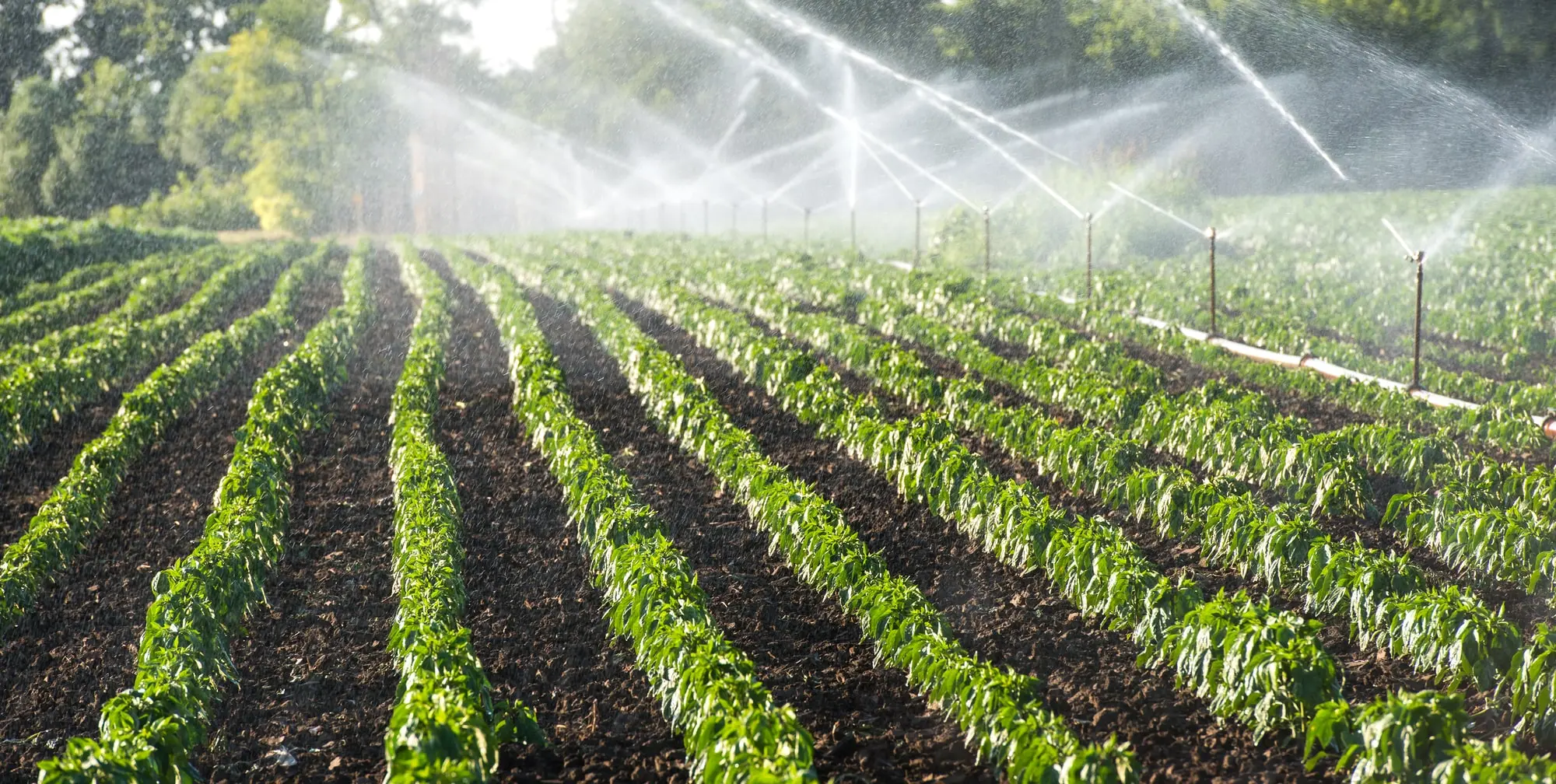
The cheapest litre of water is the one you never pump. That is the whole philosophy of smart irrigation: instead of watering on a fixed timetable — the same schedule on a rainy Tuesday as in a February drought — the system waters on evidence. Controllers, sensors and flow data decide when, where and how much, and the savings routinely surprise even experienced grounds managers.
The three layers of a smart system
- Weather-responsive control. Controllers such as the Rain Bird ESP-LXD adjust run times automatically from local weather data and evapotranspiration — the actual rate at which turf and crops are losing moisture. After rainfall, irrigation simply doesn't run; in a hot dry spell, cycles extend. Nobody has to remember anything.
- Soil moisture sensing. Probes in the root zone report what the plant actually experiences. Irrigation triggers only when moisture falls below the target band, which prevents both stress and the invisible losses of over-watering: runoff, nutrient leaching and fungal disease.
- Flow monitoring. Meters watch every zone's consumption in real time. A cracked pipe or stuck valve announces itself as an abnormal flow within minutes — not as a soggy corner and a shocking bill at month's end. On large sites, automatic isolation of a faulted zone protects the rest of the system.
What it looks like in practice
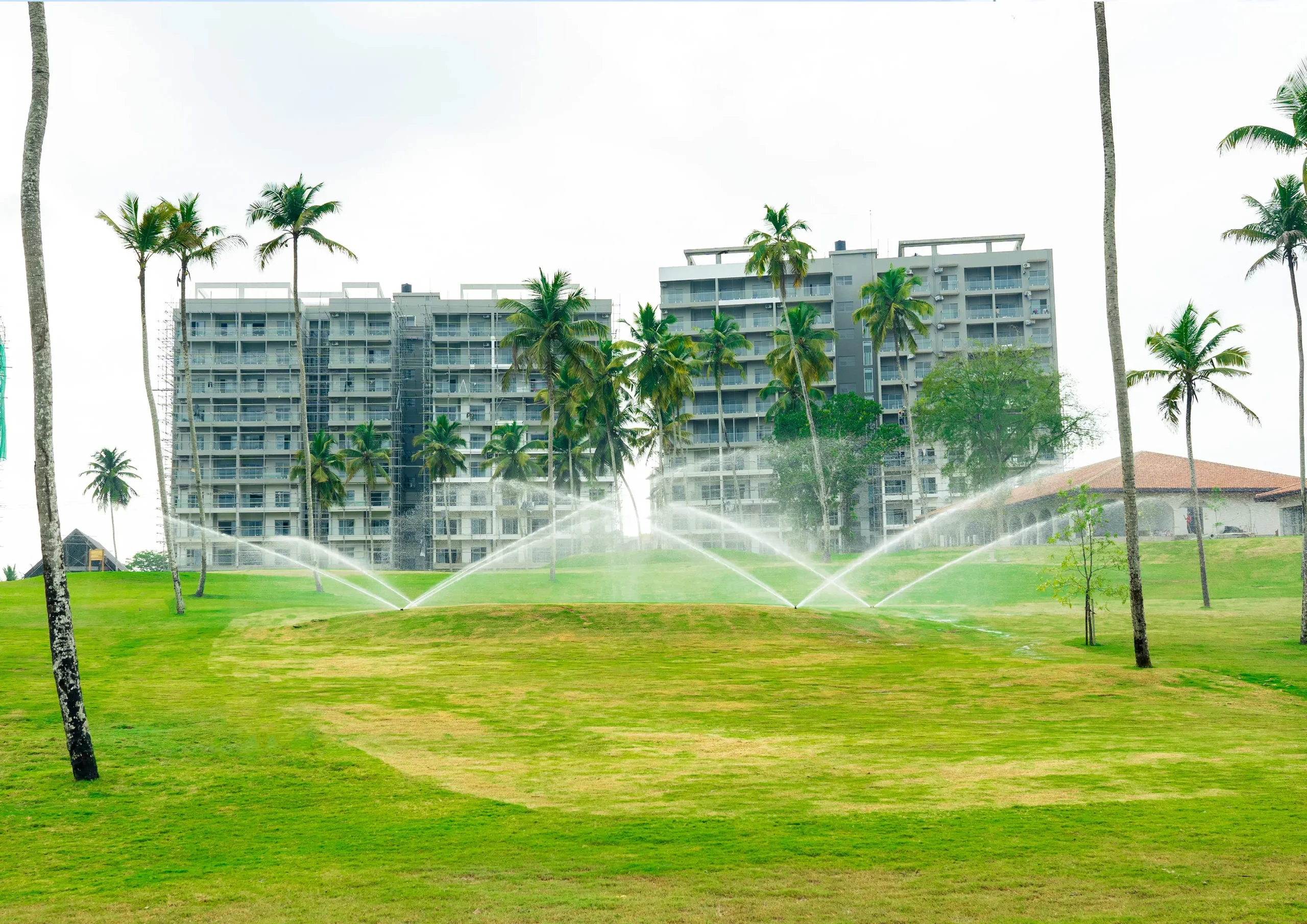
At the Sri Lankan Parliament's Sandun Uyana, weather-responsive Rain Bird control with flow sensing keeps the nation's most prestigious civic garden pristine with minimal intervention — groundskeepers monitor and adjust remotely rather than walking valve to valve. At the Canterbury Golf Ground, a central control system integrates on-site weather and soil moisture data to manage hundreds of valve-in-head rotors individually, delivering championship turf while cutting water waste. The same principles scale down to a single estate block or school ground.
The numbers that make the case
Industry studies consistently put weather-based control savings at 20–40% of irrigation water versus fixed scheduling, with soil moisture sensing achieving similar or better results — and combined systems often cutting demand by half on previously over-watered sites. The savings compound: less water pumped means less energy, less fertiliser leached means less re-application, and healthier root zones mean fewer disease and turf-repair costs. On pumped systems, the payback is typically measured in seasons, not years.
| Upgrade | Typical water saving | Bonus effect |
|---|---|---|
| Weather-based (ET) control | 20–40% vs fixed schedules | Zero-touch rain shut-off, remote management |
| Soil moisture sensing | 20–40%, site-dependent | Less leaching and fungal disease from over-watering |
| Flow monitoring | Varies — catches losses | Leaks and stuck valves found in minutes, not months |
| All three combined | Up to ~50% on over-watered sites | Documented, auditable water stewardship |
Retrofitting: you rarely need to start over
The good news for sites with existing irrigation: smart control is usually a retrofit, not a rebuild. Modern controllers replace old clocks on the same wiring, sensors integrate into existing hydraulic zones, and upgrades can be phased across seasons and budgets. An irrigation audit — mapping what you have, measuring distribution uniformity and finding the losses — is the sensible first step, and it frequently pays for itself in the first fixes it identifies.
A phased retrofit we commonly design for estates and institutions:
- Audit — map zones, test uniformity, log current consumption for a baseline.
- Control upgrade — replace the clock with an ET-capable controller; immediate savings, same pipes.
- Flow visibility — add metering at the source and major zones; find the leaks the audit suspected.
- Sensing — add soil moisture probes to the highest-value or most over-watered zones.
- Optimise — tune schedules seasonally with the data; document the savings.
Water as an asset, not an input
Sri Lanka's water future is one of sharper competition between agriculture, industry and cities. Estates and institutions that treat water as a measured, managed asset — with data to prove their efficiency — are better placed for that future than those still watering by habit. Smart irrigation is how that stewardship becomes routine.
Read how these systems anchor our landmark projects, see the commercial irrigation solutions we design, or start with an audit via the contact page.