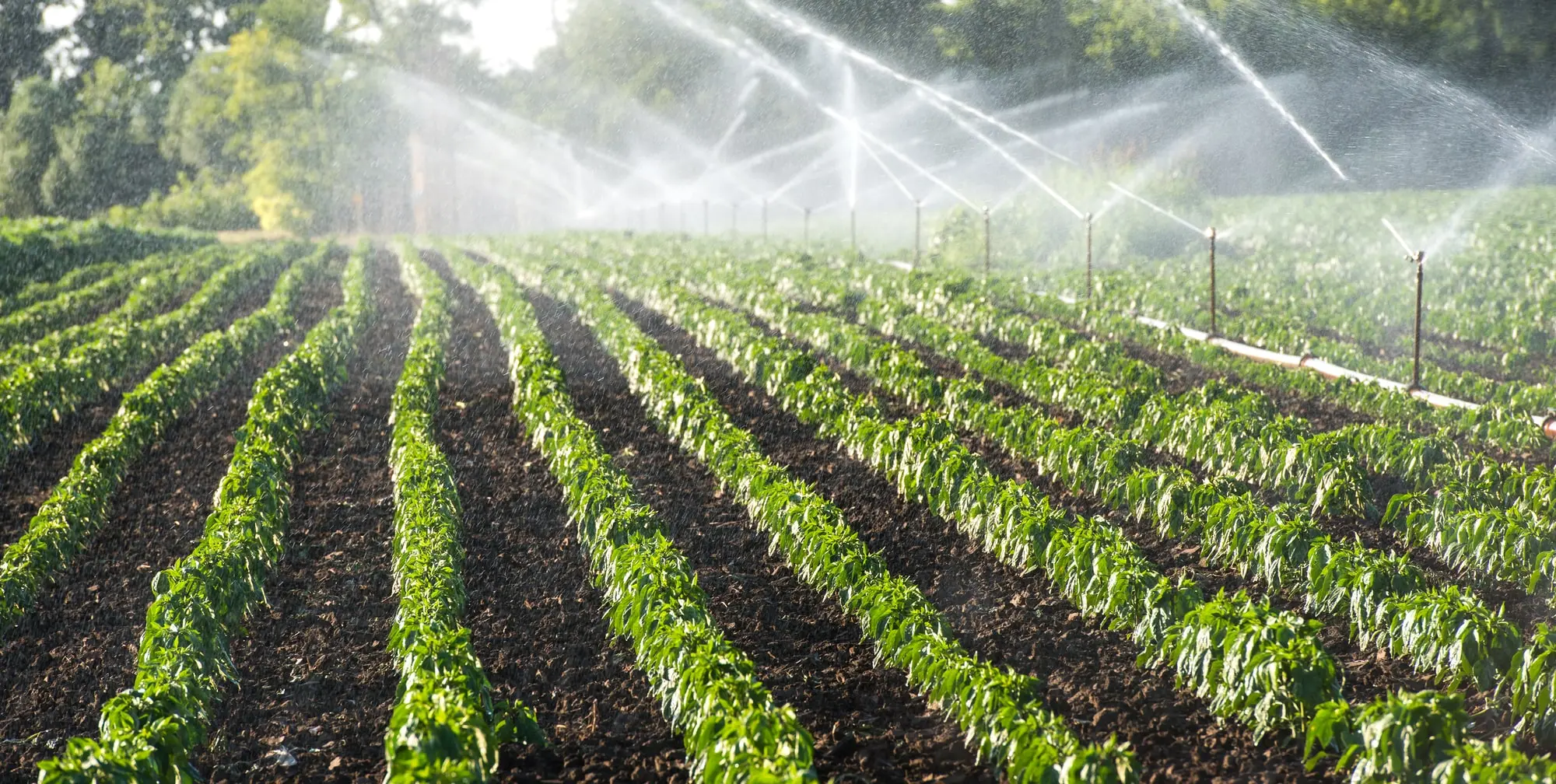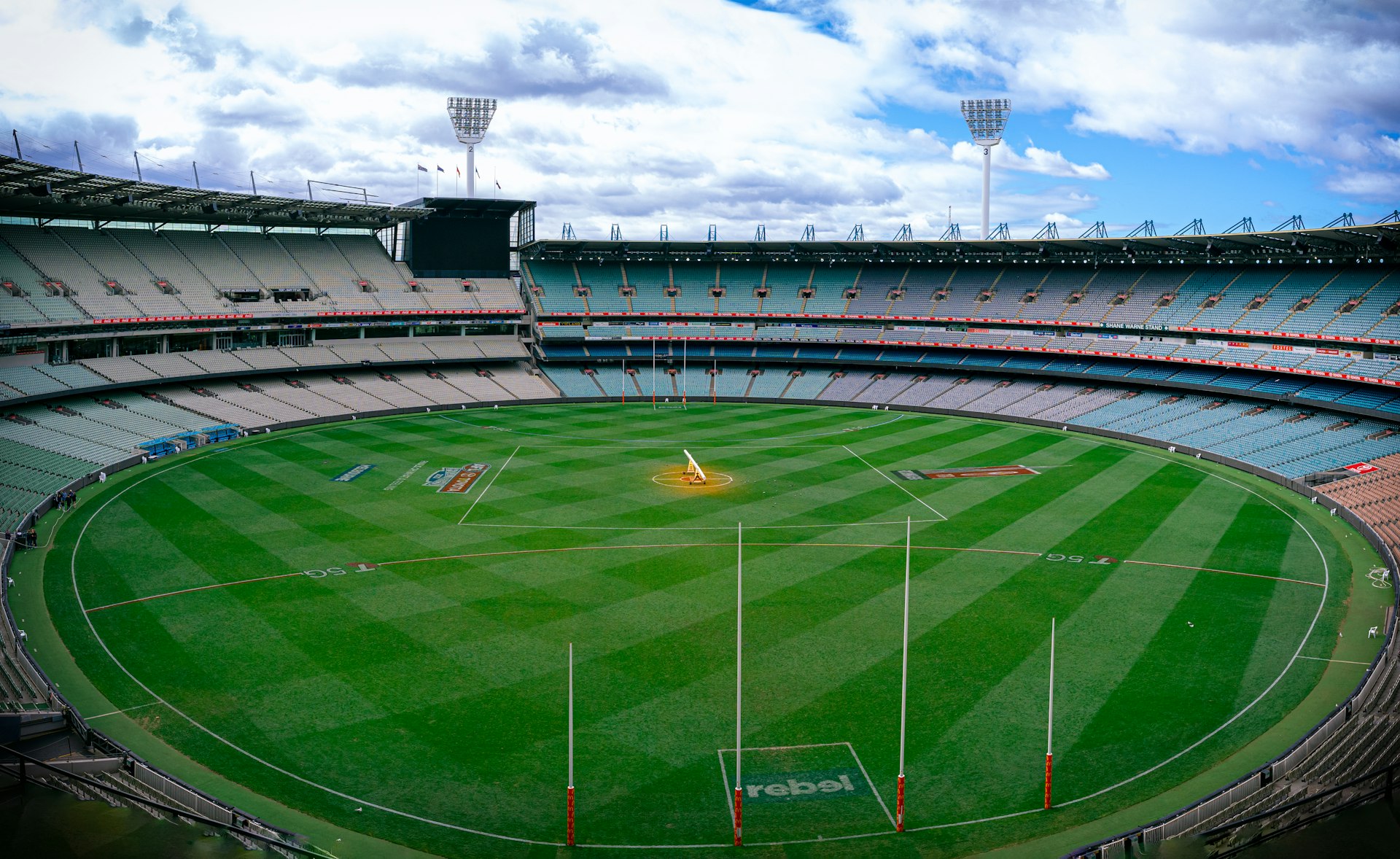
Spectators see grass. Groundskeepers see a living surface that must be firm enough for a fast outfield, soft enough for player safety, uniform enough that the ball behaves the same at every point — and green enough for television, every single week of the season. None of that happens by watering with hoses. This is the engineering behind stadium-grade turf irrigation, drawn from our work at the Mahinda Rajapaksa International Cricket Stadium, the Canterbury Golf Ground and school grounds like Zahira College.
Why turf irrigation is its own discipline
Sports turf lives in a narrow band. Too dry and it thins, hardens and injures players; too wet and it softens, invites disease, and churns to mud under studs. Unlike a farm crop, the surface must be playable on schedule — you cannot postpone a fixture because the outfield is soggy. So turf systems are engineered around three demands agriculture rarely faces: uniformity measured in percentage points, rapid watering windows that finish before dawn training, and remote confidence that everything ran as scheduled.
The hardware: valve-in-head rotors and matched precipitation
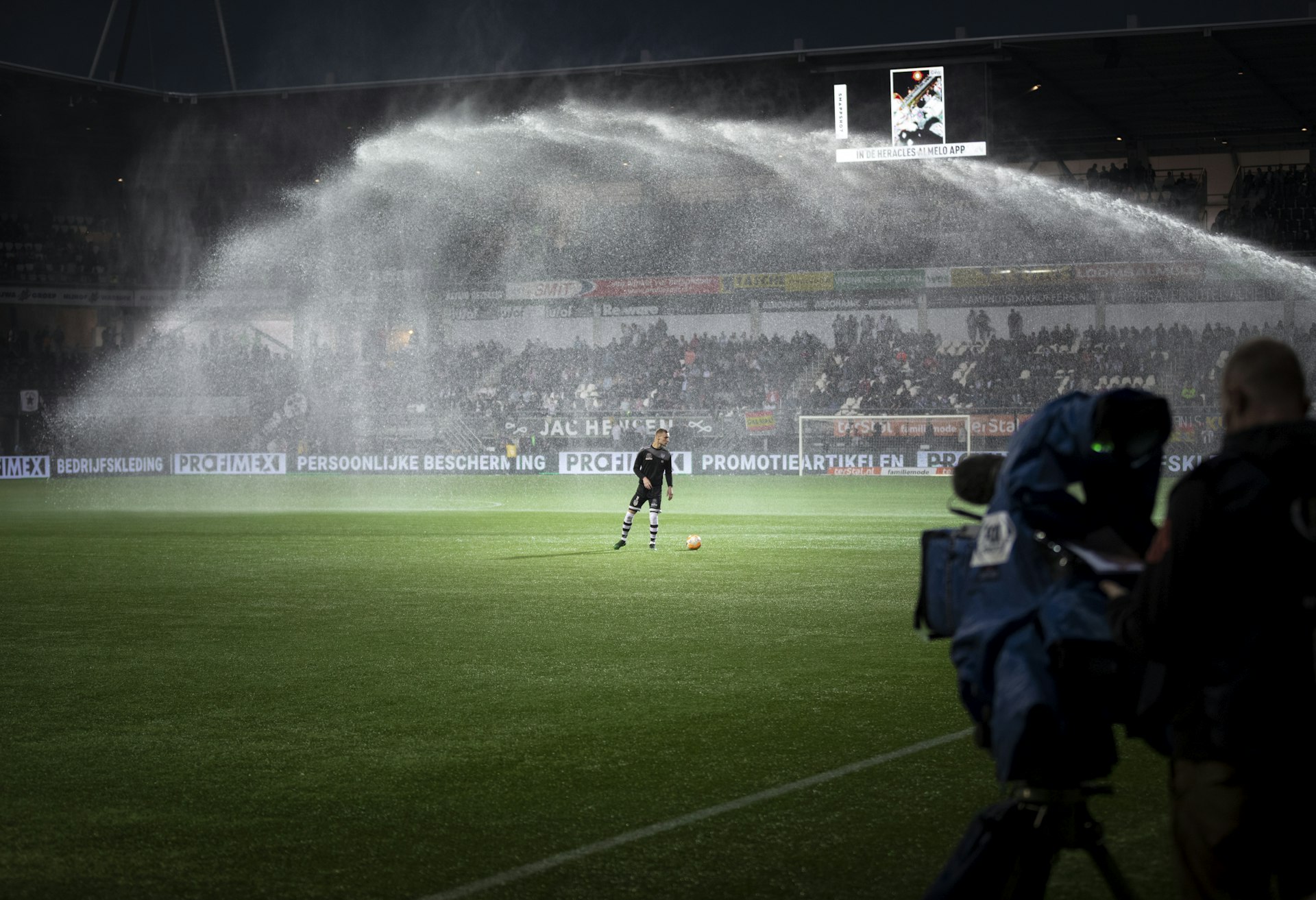
Large turf systems are built on valve-in-head rotors — sprinklers with their own electric valve inside each head, so every single rotor can be commanded individually. That's what lets a golf course water a dry knoll without soaking the green beside it, and a cricket ground treat the square differently from the outfield. Heads are spaced head-to-head — each rotor's throw reaching its neighbours — so the overlapping arcs add up to even coverage.
Uniformity is then verified, not assumed: catch-can tests measure distribution uniformity (DU) across the surface, and nozzles are matched so every zone applies water at the same rate. On television, poor DU shows up as patchwork colour; on the pitch, it shows up as inconsistent bounce.
The brain: central control, weather and soil moisture
Above the hardware sits central control. At Canterbury, the control system integrates on-site weather stations and soil moisture sensors, managing hundreds of valve-in-head rotors individually — extending run times on exposed rises, trimming them in shaded hollows, and skipping irrigation entirely when weather makes it redundant. At MRICS, precise trajectory control on the rotors guarantees uniform delivery across the expansive outfield and the critical pitch square, with rapid cycles engineered to finish inside tight windows so surfaces are match-ready. The principles are the same ones in our smart irrigation guide — applied with sporting deadlines.
Water quality, drainage and the root zone
Irrigation is half of turf water management; drainage is the other half. Sports construction layers a sand-dominant root zone over gravel and drainage lines precisely so water moves through the profile — and irrigation is scheduled little-and-often to match. Where grounds use reclaimed or variable-quality water (increasingly common for institutional sites), filtration and occasional flushing protect nozzles and soil chemistry alike. Our Port Authority work runs specialized nozzles on reclaimed water for exactly this reason.
School and club grounds: the same physics, sized honestly
A school rugby ground doesn't need a golf course's control system — but it needs the same fundamentals, honestly sized. At Zahira College we engineered a turf system around heavy athletic use and player safety: recessed heads that disappear below the playing surface, resilient turf management, and coverage designed for the wear patterns of daily training rather than weekly matches. The most common mistakes we correct on club grounds are garden-grade pop-ups on sports turf (they don't survive studs), no zoning between high-wear and low-wear areas, and watering habits copied from home lawns.
| Venue tier | Typical hardware | Control level |
|---|---|---|
| International stadium | Valve-in-head rotors, matched nozzles, trajectory control | Central control + weather + moisture sensing |
| Golf course | Hundreds of individually valved rotors across zones | Central control with per-head scheduling |
| School / club ground | Recessed sports-rated rotors, zoned mains | Smart controller with rain shut-off |
| Training field / civic lawn | Gear-drive rotors, head-to-head layout | Programmable controller |
What a turf project looks like with us
- Surface audit — existing coverage, DU measurement, drainage behaviour, water source and quality.
- Hydraulic and head layout design — spacing, nozzle matching and zoning around wear patterns and fixtures.
- Installation with sports-rated components — Rain Bird rotors and valves engineered for athletic surfaces.
- Control and sensing — controller, weather input and moisture probes sized to the venue's real needs.
- Commissioning and handover — catch-can verification, seasonal schedules, and training for grounds staff.
From international ovals to school grounds, the physics is the same — only the scale changes. See our sports turf solutions and stadium projects, or talk to us about an audit of your ground.