
It's the first question almost every grower asks us: sprinkler or drip? The honest answer is that neither is "better" — they solve different problems, and the right choice falls out of your crop, your water, your terrain and your labour situation. This article lays out the decision framework we use on real projects, and why many of our best-performing installations are deliberate hybrids of both.
How each system delivers water
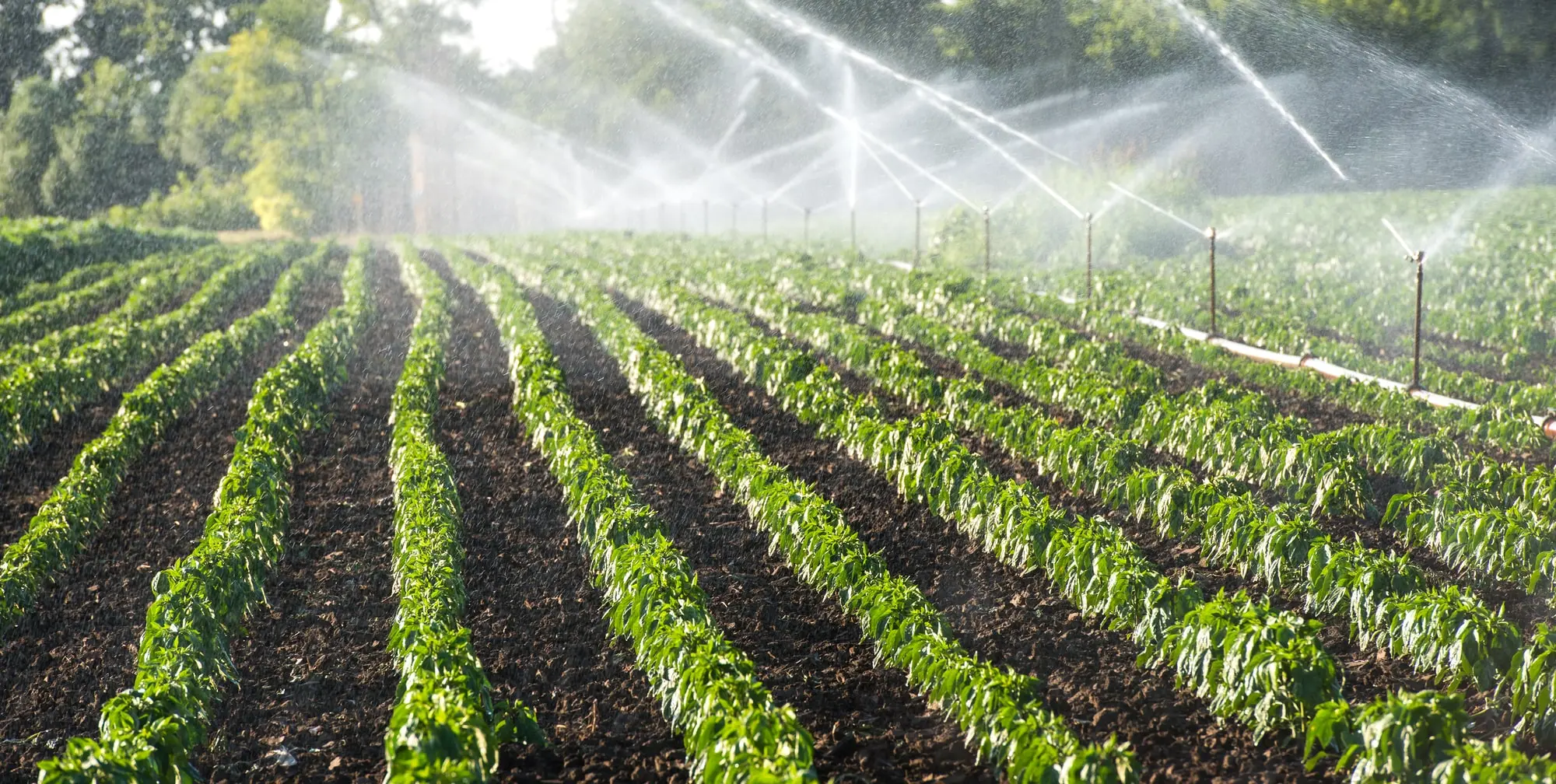
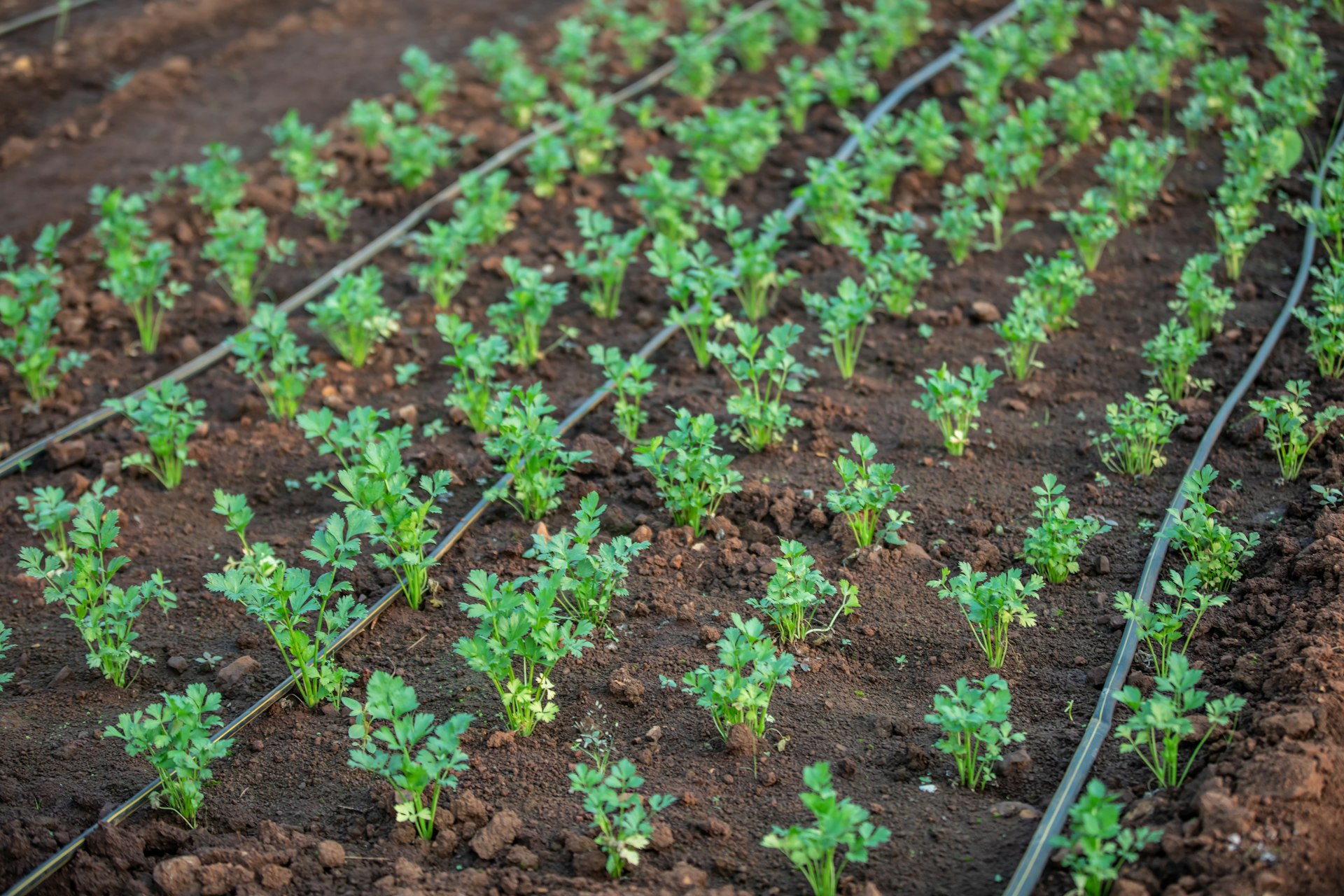
Sprinkler irrigation throws water through the air to fall like rain across the whole surface — from small garden pop-ups through impact sprinklers to large mobile and centre-pivot systems. Drip irrigation moves water silently through lateral pipes and releases it at each plant through emitters, wetting only the root zone. That single difference — whole-surface wetting versus point wetting — drives almost every practical consequence downstream.
The head-to-head comparison
| Factor | Sprinkler | Drip |
|---|---|---|
| Water efficiency | Good (70–85% typical) — loses to wind and evaporation | Excellent (90%+) — point delivery, dry surface |
| Best crops | Turf, pasture, paddy nurseries, close-planted field crops, dust-sensitive settings | Row crops, vegetables, orchards, tea, coconut, greenhouse production |
| Terrain tolerance | Sensitive to wind; handles irregular shapes with head layout | Excellent on slopes with pressure-compensating emitters |
| Fertiliser delivery | Possible, but wets foliage and wastes to non-crop areas | Fertigation is the standard — precise root-zone dosing |
| Disease pressure | Wets foliage — raises fungal risk on sensitive crops | Foliage stays dry — materially lower disease pressure |
| Filtration need | Moderate — nozzles tolerate some particles | Critical — emitters clog without proper filtration |
| Labour after install | Low with automation | Low with automation; add weekly flush routine |
| Frost/heat moderation | Can cool canopies and settle dust | None — water never touches the canopy |
Where sprinklers win
Sprinklers are unbeatable where the whole surface genuinely needs water: turf and sports grounds, pasture, seed germination across full beds, and close-planted field crops. They also do jobs drip cannot: settling dust on industrial sites (as in our Port Authority installation), cooling stressed canopies in extreme heat, and covering irregular civic landscapes with engineered head layouts. Modern precision rotors with matched precipitation rates have narrowed the efficiency gap considerably — a professionally designed sprinkler zone bears no resemblance to a hose-end splasher.
Where drip wins
Anywhere plants stand in rows or as individuals — vegetables, chilli, banana, orchards, tea, coconut — drip delivers more crop per litre than anything else, cuts disease pressure by keeping foliage dry, and unlocks fertigation, which is where much of the commercial gain lives. On slopes, pressure-compensating drip is dramatically easier to make uniform than sprinklers fighting wind and pressure variation. And where water is the binding constraint — Yala season in the dry zone — drip's 90%+ application efficiency is often the difference between a full crop and a rationed one.
The hybrid answer most estates actually need
Real properties rarely have one uniform need, which is why many of our best-performing projects combine both technologies deliberately. The Thilaka Watte Estate conversion in Kurunegala pairs micro-sprinklers where surface coverage helps with drip where point delivery wins — sharing one pump station, one filtration bank and one control system. A typical estate hybrid looks like:
- Drip on the vegetable blocks, orchard rows and any sloped sections;
- Micro-sprinklers under wide tree canopies where a broader wetted zone suits the root spread;
- Conventional sprinklers on lawns, nurseries and germination beds;
- One smart controller scheduling all of it from shared weather and flow data.
Making the decision on your land
The questions that settle it in practice: What crops, at what spacing? What does your water source yield in the dry season, and what does the water carry (sand? algae?)? How much slope? Who operates the system daily? And is water or capital your binding constraint this year? A site walk with those five questions usually makes the answer obvious — and often it's "both, zoned sensibly".
Talk through your site with our engineers via the contact page, or read the project planning guide to see how a full design unfolds.